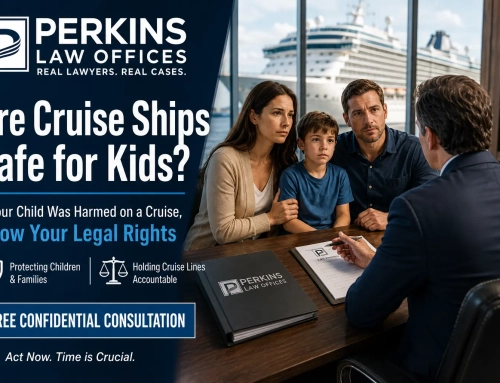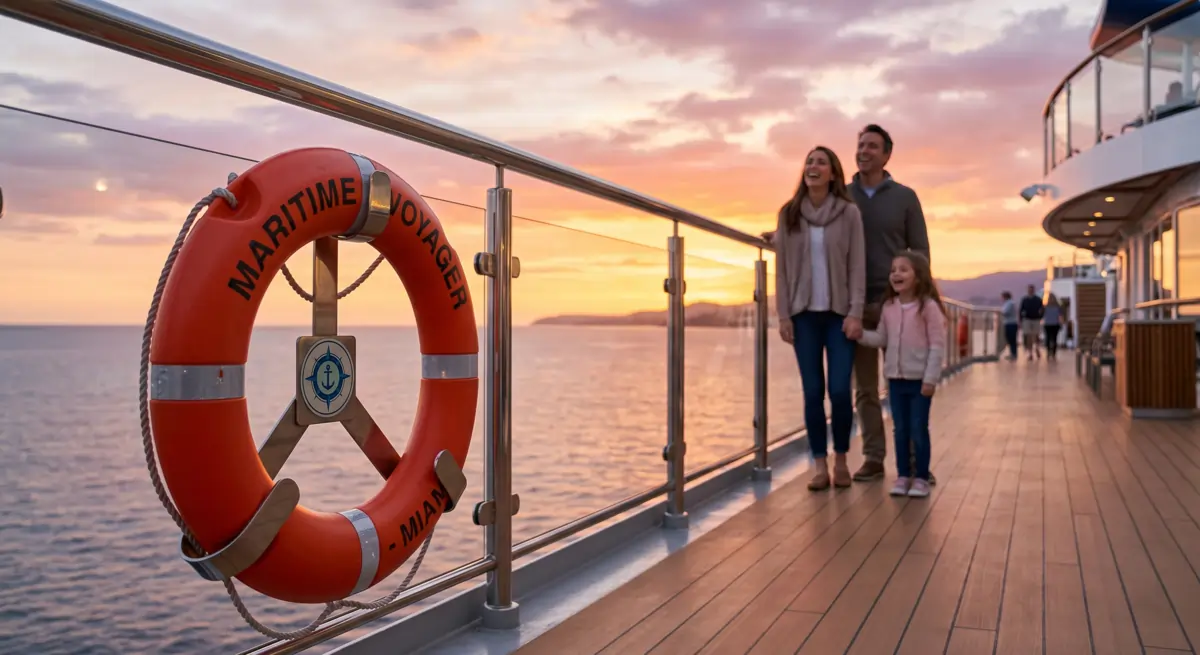
Cruise Ship Crimes & Child Safety
Protect your family at sea: Expert legal guidance on cruise ship dangers and your rights
Table of Contents
Introduction: The Cruise Industry’s Hidden Problem
Cruise vacations represent dreams for millions of families—a chance to escape, bond, and create lasting memories. However, recent federal enforcement operations have exposed a troubling reality: cruise ships can harbor criminal activity, including child sexual exploitation and abuse.
In April 2025, U.S. Customs and Border Protection (CBP) conducted coordinated operations boarding five cruise ships, including a Disney cruise docked in San Diego, investigating alleged child predators working aboard vessels. These enforcement actions underscore a critical concern: cruise ships operate in a legal gray area where criminal activity can flourish.
As experienced maritime law attorneys at Perkins Law Offices, we’ve helped families navigate the complex legal landscape following crimes at sea. This comprehensive guide explains cruise ship safety, common crimes, federal protections, and your legal options.
Understanding Cruise Ship Crimes: Types & Frequency
Crimes on cruise ships range from theft and assault to serious offenses like sexual abuse and exploitation. The cruise industry’s unique jurisdiction creates enforcement challenges that can leave victims without adequate protection.
Common Crimes on Cruise Ships
- Sexual Assault & Rape: Reported frequently, with victims often struggling to report crimes due to ship’s jurisdiction
- Child Sexual Abuse: Predators exploiting inadequate supervision and maritime jurisdiction gaps
- Trafficking: Human trafficking operations targeting vulnerable crew members
- Drug-Related Offenses: Narcotics smuggling and distribution aboard vessels
- Theft & Robbery: Theft of personal belongings, safes, and valuables
- Assault & Battery: Physical violence, including crew-on-passenger incidents
- Fraud & Deception: Schemes targeting elderly passengers
Did You Know?
The cruise industry is not required to maintain uniform crime reporting standards, making it difficult to assess the true scope of criminal activity at sea. Many incidents go unreported or unreported to proper authorities.
Why Cruise Ships Are Vulnerable to Crime
- Jurisdictional Confusion: Ships operate in international waters, creating unclear legal authority
- Limited Law Enforcement Presence: No permanent police or federal agents aboard most vessels
- Delayed Response: Coast Guard response times can be hours, delaying investigations
- Industry Self-Regulation: Cruise lines investigate their own crimes, creating conflicts of interest
- Victim Intimidation: Crew and officers may discourage crime reporting to protect corporate interests
- Language Barriers: Many crew members speak limited English, complicating investigations
- Inadequate Supervision: Limited monitoring of crew access to passenger areas, especially children’s areas
Child Safety Concerns on Cruise Ships
Children aboard cruise ships face particular vulnerabilities. While many cruise lines operate youth programs and supervised activities, inadequate background checks, training, and supervision create opportunities for predators.
Risks Children Face
- Inadequate Background Checks: Not all crew members undergo thorough vetting before working with children
- Insufficient Supervision: Youth facilities may lack proper staff-to-child ratios
- Isolated Areas: Ships have numerous isolated cabins, hallways, and spaces where abuse can occur unseen
- Authority Figures: Crew members in positions of authority may exploit their power
- Limited Reporting Mechanisms: Children may not know how to report abuse or may fear retaliation
- Delayed Parental Notification: Parents may not learn of incidents until the ship reaches port
Red Flags: Signs Your Child May Be at Risk
- Crew members spending excessive time with your child
- Requests for private meetings or time alone with your child
- Inappropriate comments or questions about your child’s body
- Gifts or special treatment without explanation
- Crew members discouraging you from supervising youth activities
- Your child becoming withdrawn, fearful, or reluctant to attend activities
- Unexplained emotional distress or behavioral changes
Recent Federal Enforcement Actions Against Cruise Ship Crimes
The April 2025 CBP operations represent an escalation in federal efforts to combat cruise ship crimes. These coordinated operations demonstrate growing concern about child exploitation at sea.
The April 2025 CBP Operation
Between April 23-25, 2025, U.S. Customs and Border Protection boarded five cruise ships, including a Disney cruise docked in San Diego, as part of ongoing “Child Sexual Exploitation Material (CSEM) enforcement operations.” According to CBP officials, these operations targeted alleged child predators working aboard vessels.
This marks a significant federal intervention in maritime law enforcement, suggesting that:
- Federal authorities are taking cruise ship crimes seriously
- Intelligence indicates active predators working aboard major cruise lines
- Even family-oriented cruise companies may hire individuals with criminal histories
- Background check systems remain inadequate across the industry
What These Operations Mean for Passengers
While CBP operations are a step toward accountability, they highlight that:
- Passengers cannot rely solely on cruise lines for safety. Federal intervention suggests internal safeguards have failed.
- Crew vetting remains inadequate. Even Disney cruises—considered the gold standard—were subject to CBP enforcement operations.
- Victims should report crimes to federal authorities. CBP, FBI, and Coast Guard have jurisdiction in international waters.
- Legal action is possible. Federal enforcement supports civil claims by victims.
How to Protect Your Family on a Cruise Ship
Before You Board: Pre-Cruise Preparation
- Research the cruise line’s safety record. Check the Cruise Lines International Association (CLIA) database and news reports for incidents.
- Review youth program policies. Request information about staff background checks, training, and supervision ratios.
- Understand the ship’s layout. Familiarize yourself with emergency routes, crew areas, and isolated spaces.
- Establish communication plans. Set up designated meeting places and check-in times with family members.
- Take photos of your children. In case of emergency, you’ll have recent photos for authorities.
- Discuss safety boundaries. Teach children about appropriate/inappropriate behavior and how to report concerns.
While Aboard: Active Safety Measures
- Maintain constant supervision of children. Never allow unsupervised time in youth programs if you have concerns.
- Know all crew members working with your children. Ask for names, positions, and background information.
- Stay alert to unusual behavior. Report crew members who seem overly interested in children or act suspiciously.
- Use cabin locks and door guards. Keep your cabin secure and consider wedging a door stopper.
- Attend public activities. Choose well-supervised, populated areas for activities.
- Keep valuables secure. Use the ship’s safe for passports, money, and identification.
- Establish a buddy system. Ensure children travel in groups and never leave them alone.
- Document everything. Take photos/videos of your children and note any concerning incidents with dates and times.
- Know how to report crimes. Identify the ship’s security office location and contact information.
If Your Child Reports Uncomfortable Behavior
- Take them seriously immediately. Do not delay or minimize their concerns.
- Move them to a safe location. Separate them from the alleged perpetrator.
- Contact ship security immediately. File a formal report with the ship’s security office.
- Request contact with CBP/FBI. Ask security to notify federal law enforcement.
- Preserve evidence. Do not allow your child to bathe; preserve clothing and physical evidence.
- Get medical attention. Request the ship’s medical officer document injuries or evidence.
- Contact a lawyer. Call an experienced maritime law attorney before speaking further with cruise line representatives.
Your Legal Rights After a Cruise Ship Crime
Federal Law & Maritime Jurisdiction
Cruise ships operating in international waters fall under complex jurisdictional rules. However, victims have several legal avenues for justice and compensation:
1. Criminal Prosecution
Crimes occurring on U.S.-flagged vessels or within U.S. territorial waters may be prosecuted under federal law. The FBI, CBP, and Coast Guard have jurisdiction to investigate and prosecute crimes at sea.
2. Civil Lawsuits Against the Cruise Line
Victims can sue cruise lines for:
- Negligent hiring: Failure to adequately vet crew members
- Negligent supervision: Failure to properly supervise employees or passenger areas
- Negligent security: Failure to implement adequate safety measures
- Breach of duty: Violating promised safety standards
- Punitive damages: For gross negligence or willful misconduct
3. Jones Act Claims
Crew members who are injured or assaulted may have claims under the Jones Act, which allows maritime employees to sue employers for negligence.
4. Damages Available
Victims may recover:
- Medical expenses (past and future)
- Mental health treatment and counseling
- Pain and suffering
- Lost wages and earning capacity
- Emotional distress and psychological trauma
- Punitive damages (in cases of gross negligence)
Important: Statute of Limitations
Federal maritime law has different statute of limitations than state law. Some claims must be filed within 2-3 years. Do not delay consulting with an attorney if you or your family has been harmed on a cruise ship.
Cruise Line Liability Waivers
Cruise lines often include liability waivers in booking terms. However, these waivers:
- Cannot fully eliminate liability for criminal acts
- May be unenforceable if you can prove gross negligence
- Are interpreted narrowly by courts
- Do not prevent federal prosecution of crimes
Do not assume a liability waiver prevents you from recovering damages. Many cruise ship injury cases have succeeded despite waivers.
How to Report Crimes on Cruise Ships
Immediate Reporting (While at Sea)
If a crime occurs aboard a cruise ship:
- Contact the ship’s security office immediately. Request to file a formal incident report.
- Request medical attention. Get injuries documented by the ship’s medical staff.
- Preserve evidence. Do not bathe or disturb the scene; keep clothing and personal items as evidence.
- Get witness information. Identify and record contact information for any witnesses.
- Request CBP/FBI notification. Ask security to notify federal law enforcement immediately.
- Document everything in writing. Get copies of all incident reports filed with the ship.
Federal Reporting (After Returning to Port)
Contact these federal agencies:
- FBI: File a report at your local FBI field office or call 1-800-CALL-FBI. The FBI has jurisdiction over crimes aboard U.S.-flagged vessels.
- Coast Guard: Contact the U.S. Coast Guard Office of Investigation (OI) to report maritime crimes.
- CBP (U.S. Customs & Border Protection): Report crimes involving child exploitation, human trafficking, or drug offenses.
- National Human Trafficking Hotline: Call 1-888-373-7888 to report human trafficking.
Legal Consultation
Consult a maritime law attorney before speaking with cruise line representatives or federal authorities. An experienced lawyer will:
- Protect your legal rights
- Advise you on evidence preservation
- Represent you in criminal proceedings if necessary
- Pursue civil claims for damages
- Coordinate with federal investigators
Frequently Asked Questions About Cruise Ship Crimes
Why Choose Perkins Law Offices for Your Maritime Case?
At Perkins Law Offices, we specialize in maritime law and personal injury cases involving cruise ships and vessels. Our attorneys understand the complex legal framework governing crimes at sea and have successfully represented victims in cases involving:
- Sexual assault and abuse aboard cruise ships
- Child exploitation and safety violations
- Negligent hiring and supervision claims
- Medical malpractice aboard vessels
- Slip-and-fall injuries on ships
- Crew member injuries and Jones Act claims
- Federal investigations and criminal cases
Our Approach
We provide compassionate, aggressive representation focused on:
- Protecting your rights: We ensure evidence is preserved and your legal interests are protected from the start.
- Investigating thoroughly: We hire private investigators, subpoena cruise line records, and coordinate with federal authorities.
- Building strong cases: We develop evidence through expert analysis, witness testimony, and documentation.
- Securing maximum compensation: We fight for the damages you deserve, including punitive damages when appropriate.
- No upfront costs: We work on contingency—you pay nothing unless we win your case.
If Your Family Was Harmed on a Cruise Ship, You Have Rights
Contact Perkins Law Offices today for a free, confidential consultation. Our experienced maritime attorneys are ready to help you pursue justice and compensation.
Additional Resources & Information
Government & Industry Resources
- Cruise Lines International Association (CLIA): Industry organization with safety standards and member cruise lines
- U.S. Coast Guard: www.uscg.mil – Maritime law enforcement and investigation
- FBI: www.fbi.gov – Federal crimes investigation, call 1-800-CALL-FBI
- CBP (U.S. Customs & Border Protection): www.cbp.gov – Crimes at borders and ports
- National Human Trafficking Hotline: 1-888-373-7888
Victim Support
- RAINN (Rape, Abuse & Incest National Network): 1-800-656-HOPE (4673) – Free confidential support for sexual assault survivors
- National Center for Missing & Exploited Children: 1-800-THE-LOST – Resources for child safety
- Childhelp National Hotline: 1-800-422-4453 – Child abuse reporting and support
Contact Perkins Law Offices
We’re here to help. If you or a family member has been harmed on a cruise ship, contact us today for a free, confidential consultation.
Perkins Law Offices
Specializing in Maritime Law & Personal Injury
📞 Phone: 305-741-5297
📧 Email: perkins@perkinslawoffices.com
🌐 Website: https://www.perkinslawoffices.com
📍 Address: 1728 Coral Way, Suite 702
Available 24/7 for emergencies