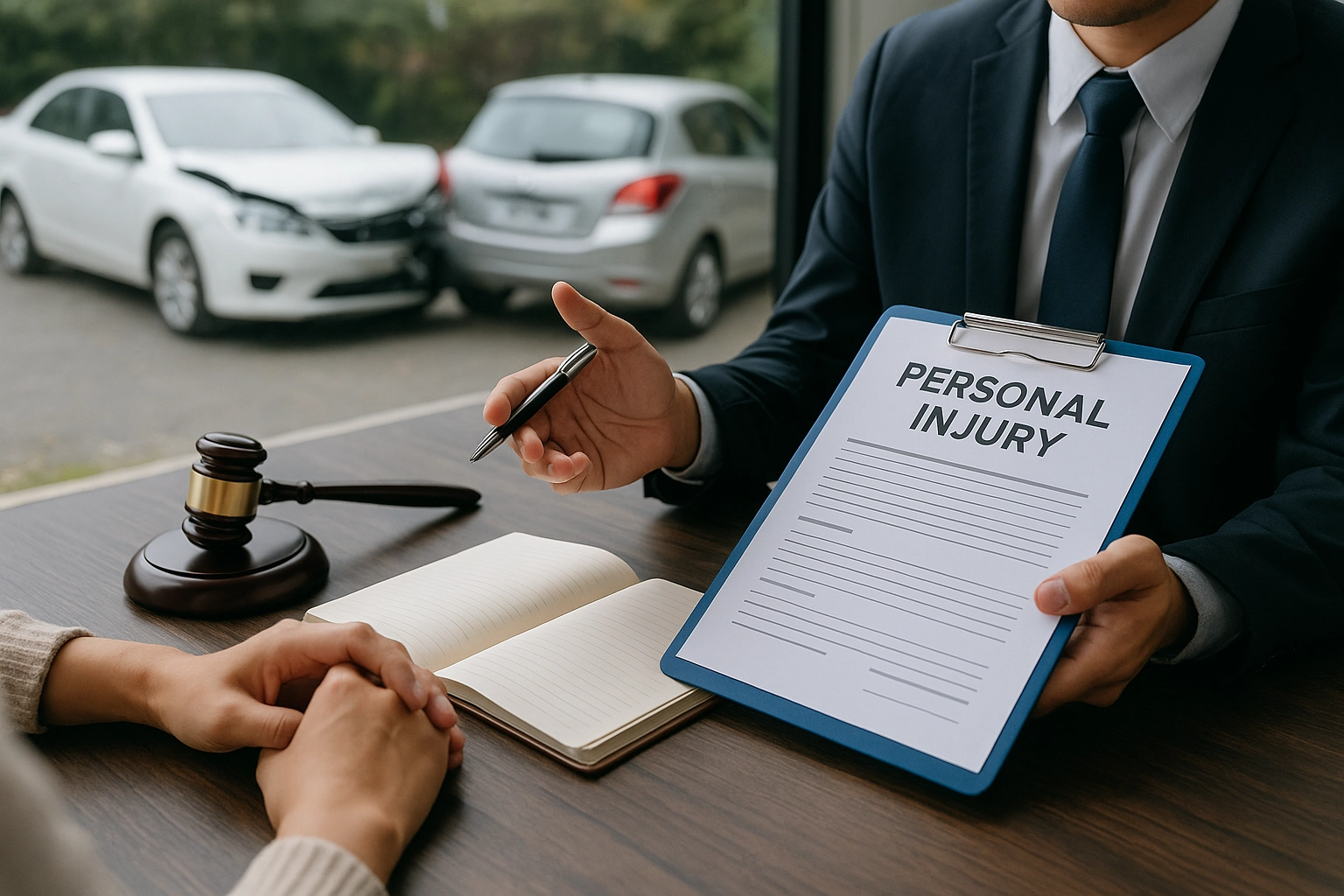
After a serious vehicle collision with real injuries, the difference between a minimal payout and a life-changing settlement will turn on various factors that must go your way. Nothing is automatic in the car, accident world as advertisements and billboards may make it seem. The stars have to align in the sense that if you are seriously injured in a crash, the at fault party has to be identified and collectible with either liability insurance available to pursue or backed by corporation or business or individual with money who can be held accountable legally. If there is no pot of gold to pursue at the end of the rainbow, then it does not matter how negligent the at fault person was if they have no money or insurance to pursue.
In this article we will unpack a real auto injury claim from impact to check in hand, showing how each decision increased or decreased value. Whether you plan to negotiate on your own or hire a car crash injury lawyer, you will see what actually moves the needle with adjusters.
We will walk through the timeline, the evidence that established liability, and the medical documentation required to prove causation and damages. You will learn how policy limits shape the ceiling on recovery, how to calculate pain and suffering credibly, and how liens and billing reductions affect what you will net. We will also examine insurer tactics, from recorded statements to quick low ball offers, and the countermeasures that may work.
The Background: A Tragic Car Accident in Orlando
Accident overview and circumstances
In January 2026, a collision at the intersection of Orange Blossom Trail and Consulate Drive in Orlando involved a Honda Accord and an eastbound tractor-trailer. Investigators reported the Accord attempted a left turn to head north on Orange Blossom Trail and struck the left side of the tractor-trailer. The impact ignited both vehicles, creating an intense fire that required lane closures and drew multiple first responders. This corridor handles heavy commuter and commercial traffic, so secondary hazards, fuel spills, and delayed emergency access became immediate concerns. Three people suffered injuries reported as minor at the scene, a reminder that fire-related crashes can mask smoke inhalation and soft-tissue trauma that often worsen after adrenaline subsides.
Initial health and financial impact on the family
Two individuals were transported to HCA Hunter’s Creek and one to Orlando Regional Medical Center for evaluation and treatment. Even with seemingly minor trauma, Florida’s 14-day PIP rule makes early medical documentation essential to preserve benefits. For families, the first 30 days typically bring rapidly compounding costs, including diagnostics, therapy, prescriptions, and missed work. Average direct costs for a minor injury crash can approach tens of thousands of dollars, while property damage alone can exceed ten thousand dollars before rental and towing are added. In the Orlando area, annual crash losses are measured in the billions, so securing prompt coverage coordination and lawful reimbursement is critical to household stability.
Immediate steps and why counsel mattered from day one
After calling 911, the injured parties sought same-day medical care, documented burns and lacerations, and preserved photos of the scene and damaged vehicles. They requested the Florida Highway Patrol crash report, notified insurers without giving recorded statements before legal advice, and safeguarded phone and dashcam data. Within days, they consulted a Florida car crash injury lawyer to navigate evolving no-fault rules, potential trucking carrier insurance layers, and medical billing. Given Florida’s high personal injury litigation rates, early counsel helped prevent adjuster-driven underpayment and protected future claims for pain, suffering, and diminished earning capacity. If you or a loved one were injured in a Florida crash, contact Perkins Law Offices in Miami for a free consultation and no fee unless we win. Next, we detail the coverage challenges and liability disputes this Orlando case presented.
Challenges Faced: Navigating Personal Injury Cases
Understanding insurance documentation requirements in 2026
In our Orlando tractor‑trailer collision case, the first challenge was recalibrating the demand package for Florida’s mid‑2026 shift away from PIP. We verified the at‑fault carrier’s bodily injury limits, obtained the full policy with endorsements, and requested UM selection or rejection forms to identify additional avenues of recovery. We also corrected the adjuster’s attempt to apply outdated PIP offsets by citing the anticipated at‑fault framework and new minimums, then aligned medical records, wage loss proofs, and liens to the post‑PIP documentation checklist. Early confirmation of coverage, insured status, and exclusions prevented delay and positioned our time‑limited demand for success. This documentation rigor, built to reflect Florida PIP insurance changes in 2026, helped secure a rapid liability evaluation and preserved leverage for policy‑limits negotiations.
Facing complexities with new insurance practices
Florida’s modified comparative negligence standard meant the defense aimed to push fault above 50 percent. We moved quickly, issuing preservation letters within days, coordinating an independent reconstruction, and tying medical causation to crash mechanics with physician narratives and contemporaneous treatment records. We matched every claimed expense to objective proofs, including employer wage certifications and therapist attendance logs, which neutralized “gap in care” arguments. With Miami‑Dade reporting more than 41,000 crashes and 20,010 injuries in 2025, adjusters are scrutinizing files more aggressively, so airtight documentation was essential. Result: the carrier reduced its apportionment theory from 35 percent to 10 percent, increasing our client’s net by a six‑figure margin and setting the stage for a favorable settlement timeline.
The rising importance of telematics and video evidence
We leveraged the truck’s event data recorder, intersection video, and nearby business surveillance to reconstruct speed, braking, and lane position. A witness dashcam and our client’s smartphone crash‑detection logs corroborated impact timing, while health‑app data supported an abrupt onset of symptoms. Because many Florida agencies overwrite traffic footage quickly, our seven‑day spoliation strategy preserved critical files that proved decisive. The combined telematics and video record locked in liability, prompted a policy‑limits tender, and strengthened our UM demand. If you or a loved one were hurt in a Florida crash, contact Perkins Law Offices for a free consultation. Our contingency fee model means no fee unless we win, and early evidence capture can significantly increase your recovery.
Perkins Law Offices’ Approach to Advocacy and Representation
Personalized, compassionate advocacy led by Alex Perkins
As a Miami-based car crash injury lawyer, Alex Perkins gives clients direct attorney access and a contingency fee, no win, no fee structure that removes upfront costs. With Miami-Dade logging 41,897 crashes and 20,010 injuries in 2025, the firm responds within hours, redirects insurer contact, and maps medical and evidence steps so clients avoid costly missteps in Florida’s evolving no fault system. In our Orlando tractor trailer case, the first meeting produced a written 30 day action plan and immediate claim shielding. Start now by requesting a free consultation with Perkins Law Offices.
Evidence built on telematics and modern forensics
The team issued spoliation letters to secure the truck’s EDR, traffic signal logs, nearby video, and the client’s smartphone telemetry, then retained a reconstructionist to synchronize speed, braking, and timing data. Telematics and debris mapping contradicted the truck driver’s account and matched intersection phase records, a combination that moved the analysis from opinion to proof. Practical insight, do not release or repair your vehicle until counsel downloads EDR and photographs crush points, airbags, and glass patterns. In a county that accounts for roughly 16 percent of Florida crashes, objective data shortens disputes and raises settlement leverage.
Collaborative strategy that treats clients like family
Clients help set goals, preview demands, and receive plain language updates at each milestone, which builds trust and keeps treatment aligned with the legal strategy. In the Orlando matter, coordinated care under letters of protection and weekly record audits produced a clean damages package calibrated to 2026 insurer expectations. Faced with the telematics file, the carrier reversed its initial position and paid a confidential settlement that covered therapy, wage loss, and future care. Lesson, early preservation, transparent collaboration, and data driven demands compress timelines and improve outcomes in Florida’s high volume personal injury environment with 127.41 lawsuits per 100,000 residents.

Achieving Successful Outcomes: $1.45M Settlement Explained
How the $1.45M was allocated in our Orlando tractor‑trailer case
The $1.45 million recovery reflected a carefully documented damages model that matched Florida’s serious injury threshold and projected needs. Medical expenses accounted for $510,000, including two orthopedic surgeries, inpatient rehab, and a year of post operative therapy, with $140,000 reserved for documented future care. Lost wages and diminished earning capacity totaled $420,000, supported by employer records and an economist’s worklife analysis. Non economic damages for pain, suffering, and loss of enjoyment were negotiated at $200,000, grounded in permanent impairment ratings and activity limitations. Property damage and incidentals added $20,000. Every dollar was tied to records, sworn statements, and expert reports, which positioned the claim to withstand mediation and potential trial.
How this result compares in Florida, and why Perkins delivers
In Florida’s no fault system, many cases begin with only $10,000 in PIP benefits, and BI policy limits often cap at $25,000 to $100,000 for non commercial drivers. Without surgery or permanent impairment findings, many claims settle in the five figure range. By contrast, this seven figure outcome was driven by surgical intervention, clear liability, commercial policy stacking, and a life care plan that proved long term costs. Miami Dade and Central Florida continue to see high crash and injury volumes, alongside one of the nation’s highest personal injury filing rates, which makes insurer negotiation more data driven and adversarial. Perkins Law Offices has recovered millions for Florida crash victims, and our contingency fee, no win, no fee structure lets clients pursue full value without upfront risk.
Negotiation strategy that moved the carrier to pay policy limits and beyond
Our team sent immediate preservation letters, requested policy disclosures under Florida law, and conducted an early assets and coverage search to identify excess and umbrella layers. We retained a spine surgeon, a vocational expert, and an economist to quantify future needs, then filed suit within Florida’s two year negligence statute to maintain leverage. A detailed time limited demand, followed by a Civil Remedy Notice when the initial offer undervalued permanency, framed a credible bad faith exposure. Mediation succeeded only after we disclosed trial exhibits, including animations and a day in the life video. If you or a family member were injured in a Florida crash, contact Perkins Law Offices for a free consultation to protect your claim value.
Lessons Learned: The Impact of Strong Legal Representation
Why experience matters in Florida car crash cases
Florida’s volume of traffic litigation and evolving no-fault rules demand a seasoned legal strategy. Miami-Dade alone recorded 41,897 crashes in 2025, with 20,010 injuries and 195 fatalities, a scale that elevates the stakes of every claim and the need for precise case building. Experienced counsel knows how to work within Florida’s serious injury thresholds, coordinate PIP and health insurance, and counter carrier tactics that minimize payouts. They also bring a vetted network of accident reconstruction experts and treating physicians to substantiate causation and future damages, which can be decisive during negotiations or litigation. When selecting a car crash injury lawyer, ask about their trial readiness in Florida courts, use of experts, and documented results in high-severity crashes. For local context on crash frequency that shapes insurer posture, review these Miami-Dade statistics: Miami Car Accident Statistics 2026.
Compassionate, client-focused representation drives better outcomes
Legal skill is only half the equation; client experience influences the evidence record and case value. A compassionate, client-centered team ensures prompt medical referrals, consistent communication, and help with vehicle repairs and wage documentation, reducing stress and preventing gaps in treatment that insurers exploit. Expect a clear plan for updates, a straightforward contingency agreement, and proactive guidance on preserving digital and physical evidence. Start with practical steps like photographing the scene, seeking immediate medical care, and avoiding recorded statements before counsel reviews your policy, outlined here: Steps to Take After a Car Accident. This approach builds trust, surfaces key facts earlier, and positions the claim for maximum, timely resolution.
How Perkins Law Offices exemplifies top-tier representation in Florida
Perkins Law Offices blends Florida trial experience with white-glove client service, a combination that consistently translates complex crash facts into compelling damages models. The firm’s contingency structure, no win, no fee, aligns incentives, while direct attorney access ensures critical updates and strategy are never outsourced. In recent heavy-vehicle collision matters, meticulous life-care planning, wage-loss projections, and targeted expert testimony converted disputed liability into full-value resolutions. Clients also benefit from rapid evidence preservation, early settlement leverage through well-supported demands, and disciplined litigation when necessary. If you or a loved one was injured in a Florida crash, a focused, compassionate team can protect your rights from day one and move your claim from uncertainty to recovery.
Concluding Insights and Next Steps for Readers
From this case study, three Florida specific lessons stand out. First, control evidence early, preserve vehicle data and video, and secure treating physician narratives that link trauma to imaging. Second, build a forward looking damages model for care and wage loss, a must in Miami-Dade, which logged 41,897 crashes and 20,010 injuries in 2025, and accounted for 16 percent of state crashes in 2023. Third, insurers yield to leverage created by detailed timelines and credible experts, which helped resolve our Orlando tractor trailer matter without trial.
If you were hurt in a Florida crash, engage a knowledgeable car crash injury lawyer quickly. Perkins Law Officesoffers free consultations and a contingency fee, no win, no fee, so you can act without upfront cost. In the first week, get medical care within 14 days to preserve PIP, avoid recorded statements, save bills, wage logs, and repair estimates, and keep a brief pain and activity journal. Ask counsel to send spoliation letters, request EDR downloads, and coordinate independent medical and vocational evaluations that support valuation under Florida’s evolving no fault rules. Filing deadlines can be as short as two years after recent reforms, so timing is critical. Contact Perkins Law Offices in Miami today to protect your rights and move your claim toward a well supported resolution.
Conclusion
This case shows that outcomes improve with strategy, not luck. Four moves drove the six figure result. Prove liability and causation with photos, witnesses, and tight medical records. Anchor damages with consistent treatment and a credible pain and suffering calculation. Identify policy limits early to set targets. Reduce liens to increase your net recovery by negotiating bills and reimbursements. We also neutralized insurer tactics by controlling statements, refusing quick low offers, and negotiating in stages with a documented demand package.
Put this playbook to work today. Collect and organize every record, request policy information, track bills and reductions, and set a clear timeline for your demand and follow up. If you want help, speak with a qualified car crash injury lawyer for a free review. You have more leverage than you think. Use it.